10 Foods You Shouldn’t Give Your Dog at Christmas As They Are More Dangerous Than You Think

It’s so tempting to want to spoil your dog in the same way we spoil ourselves during the festive period. How could it hurt to give them their own Christmas dinner? After all, they are one of the family, so they should be able to join in.
Unfortunately, it’s not that simple. Our well-meaning gesture to our pampered pooches could have catastrophic consequences, so proceed with caution. Many traditional Christmas dishes can be dangerous, even deadly, for dogs.
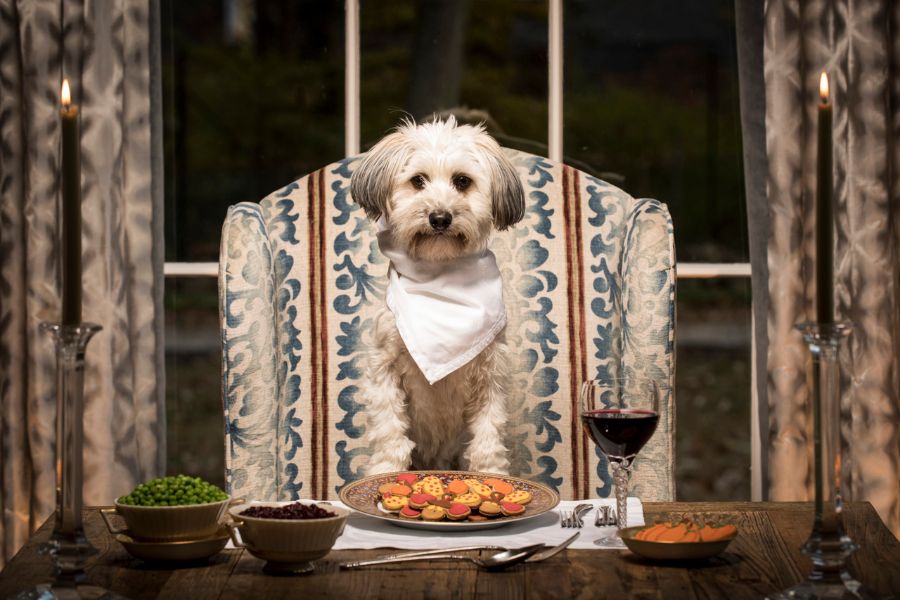
10 Foods You Shouldn’t Give Your Dog at Christmas
Here are ten common Christmas foods to keep away from your furry friend, along with safe alternatives so they can still feel included in the celebration.
1. Turkey Bones
Cooked turkey bones become brittle and splinter easily when chewed. These sharp fragments can cause severe problems, including choking, punctured organs, blockages in the digestive tract, broken teeth, and cuts to the mouth and throat.
Even if a bone doesn’t splinter, large pieces can become lodged in the esophagus or intestines, requiring emergency surgery.
Safe Alternative
Instead of bones, offer your dog plain, cooked turkey breast meat (white meat is best as it’s leaner). Make sure it’s completely boneless, skinless, and unseasoned.
You can also provide safe chew toys like Kong toys filled with dog-safe treats, or veterinarian-approved dental chews designed specifically for dogs.
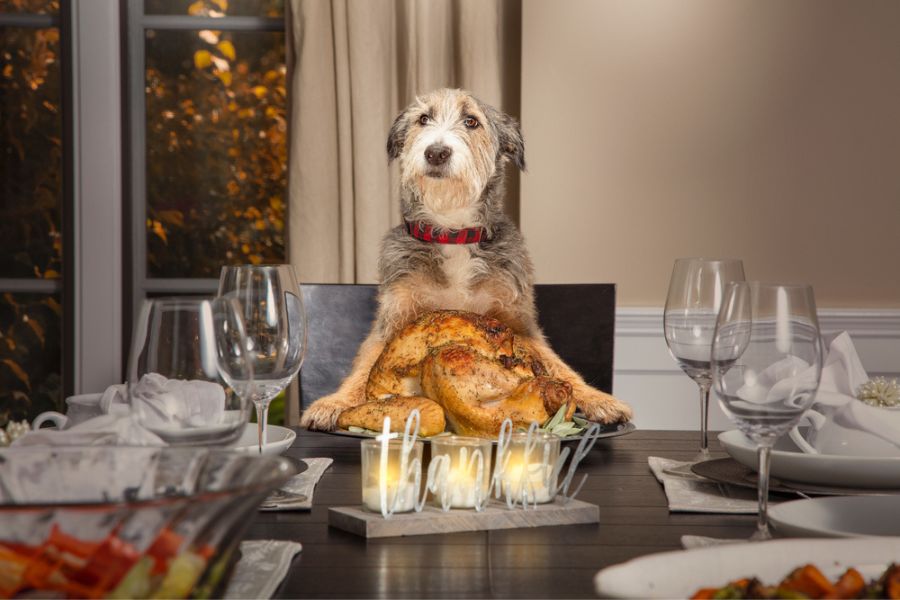
2. Turkey Skin and Fatty Meat
Turkey skin and fatty cuts are loaded with fat that can trigger pancreatitis, a painful and potentially life-threatening inflammation of the pancreas. High-fat foods trigger premature activation of pancreatic enzymes, which begin digesting the pancreas itself.
Symptoms include vomiting, diarrhea, loss of appetite, abdominal pain, lethargy, and fever. Pancreatitis cases spike during the holidays due to well-meaning pet owners sharing rich foods.
Safe Alternative
Stick to small portions of plain, cooked white turkey meat with all skin and fat removed. Make sure it’s unseasoned and served in moderation. You can also prepare special dog-friendly turkey treats by boiling plain turkey breast and cutting it into small pieces.
3. Stuffing/Dressing
Stuffing typically contains onions, garlic, chives, and various herbs and spices, many of which are toxic to dogs. Onions and garlic (both from the Allium family) can damage red blood cells and cause hemolytic anemia, in which the cells burst and circulate throughout the body. Even small amounts can be harmful, and the effects can be cumulative.
Safe Alternative
If you want your dog to enjoy something savory, offer plain cooked rice mixed with a small amount of plain turkey meat, or prepare a simple dog-safe version with plain bread cubes and low-sodium broth (no onions, garlic, or seasonings).
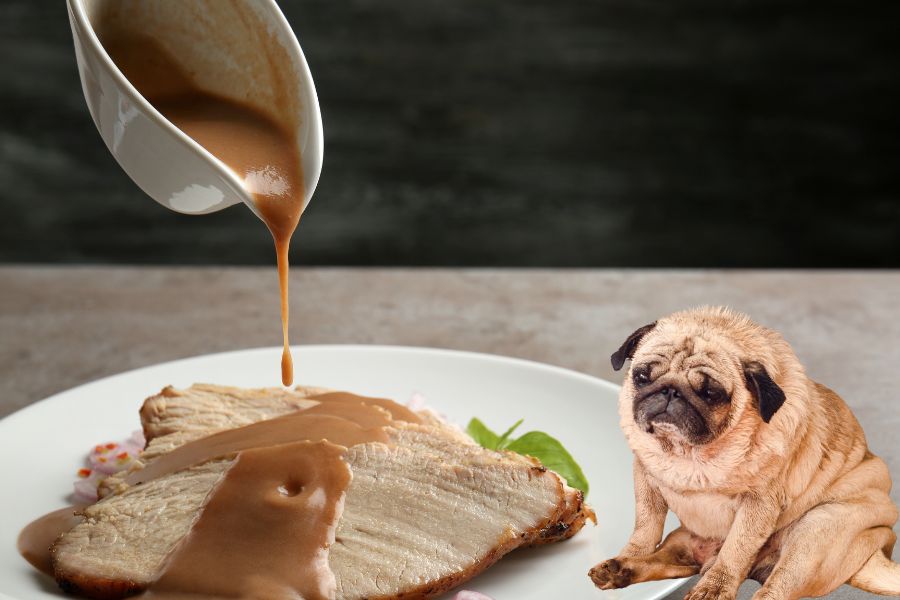
4. Gravy
Gravy is typically high in fat, salt, and often contains onions, garlic, or other seasonings that are harmful to dogs. The high fat content can lead to pancreatitis and digestive upset, while the excessive salt can cause sodium ion poisoning, leading to excessive thirst, urination, vomiting, and diarrhea.
Safe Alternative
Make a dog-friendly “gravy” by mixing a small amount of low-sodium chicken or turkey broth (with no onions or garlic) with their regular food. Keep portions very small, as even low-sodium broth should be given sparingly.
5. Onions and Garlic
All members of the Allium family (onions, garlic, shallots, leeks, chives) contain compounds that damage dogs’ red blood cells, causing hemolytic anemia. This condition can lead to weakness, lethargy, pale gums, orange-colored urine, and difficulty breathing. Garlic is particularly concentrated and dangerous. The effects can be delayed, sometimes not appearing for several days after ingestion.
Safe Alternative
There’s no need to substitute onions or garlic, as dogs don’t need these flavors. Season your dog’s food with dog-safe herbs like parsley in very small amounts, or simply offer plain, unseasoned foods that dogs naturally enjoy.
6. Grapes and Raisins
Grapes and raisins can cause sudden and severe kidney failure in dogs, even in small amounts. The exact toxic compound is unknown, but the effects can be devastating. Symptoms include vomiting, diarrhea, lethargy, loss of appetite, and decreased urination.
Some dogs may be more sensitive than others, but since no safe amount has been established, all grapes and raisins should be avoided entirely.
Safe Alternative
If you want to offer your dog fruit, try safe options like small pieces of apple (without seeds or core), blueberries, or seedless watermelon. Always introduce new fruits in small quantities.
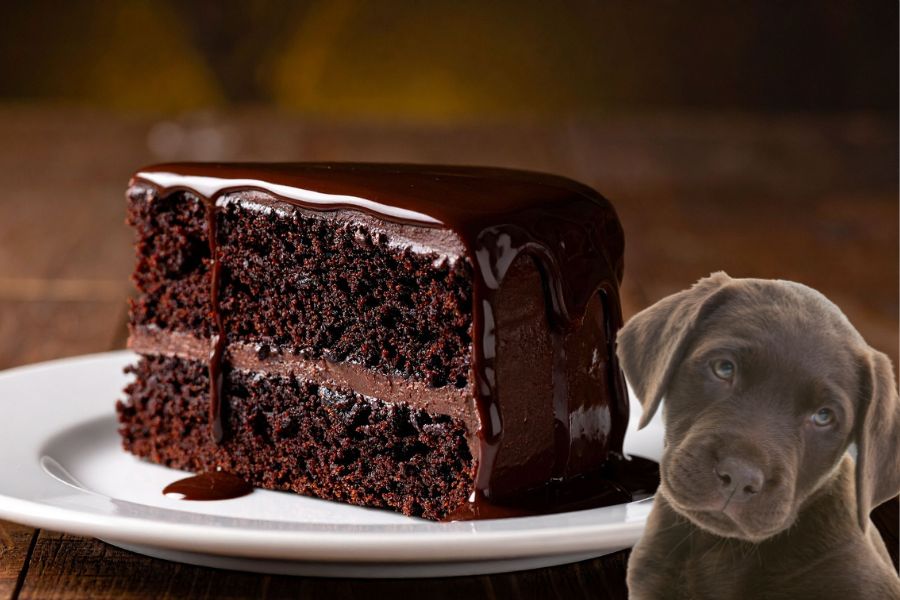
7. Chocolate Desserts
Chocolate contains theobromine and caffeine, both of which are toxic to dogs. Dark chocolate and baking chocolate contain the highest concentrations and are the most dangerous.
Even small amounts can cause vomiting, diarrhea, rapid heart rate, tremors, seizures, and, in severe cases, death. The darker and less sweetened the chocolate, the more toxic it is.
Safe Alternative
Make or purchase dog-friendly treats specifically formulated for dogs. You can make homemade pumpkin and peanut butter dog cookies (ensure the peanut butter doesn’t contain xylitol), or offer small amounts of plain canned pumpkin as a sweet treat.
8. Raw Bread Dough
Raw bread dough containing active yeast is extremely dangerous. When ingested, the warm, moist environment of a dog’s stomach provides ideal conditions for the yeast to continue fermenting. This causes two major problems: the dough expands in the stomach, causing painful bloating and potentially life-threatening gastric dilation, and the fermentation process produces alcohol, which can lead to alcohol poisoning.
Symptoms include bloating, disorientation, weakness, and in severe cases, seizures and coma.
Safe Alternative
Plain, fully baked bread without nuts, raisins, or excessive salt can be given as an occasional small treat if your dog has no wheat allergies. However, bread offers little nutritional value, so it’s best to stick to treats specifically made for dogs.
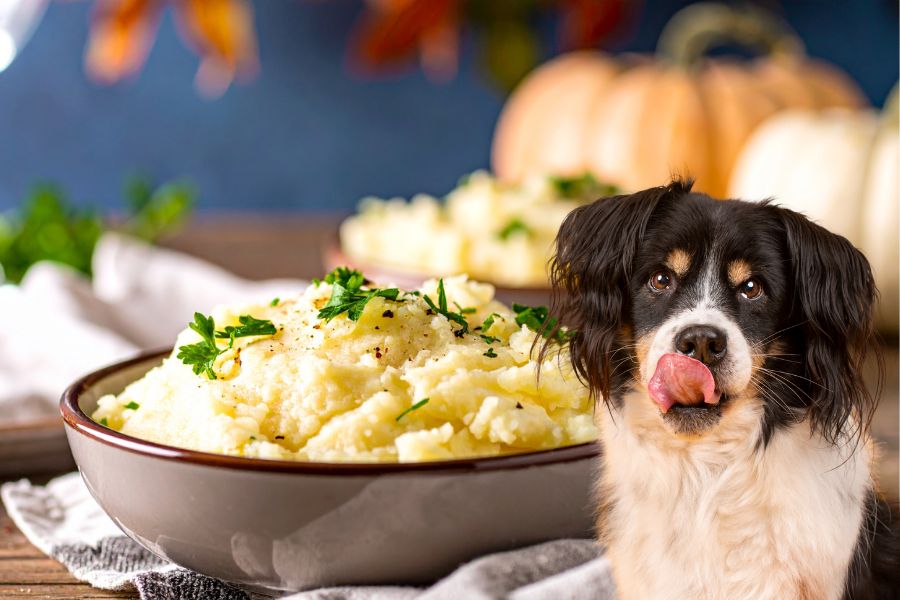
9. Mashed Potatoes (with butter, cream, or milk)
While plain potatoes aren’t toxic, traditional mashed potatoes are loaded with butter, cream, milk, salt, and sometimes garlic or onion powder. The high fat content from butter and cream can cause pancreatitis and digestive upset.
Many dogs are also lactose intolerant and lack sufficient lactase enzyme to digest dairy products, leading to diarrhea, gas, and stomach discomfort.
Safe Alternative
Offer small amounts of plain, cooked potatoes (baked, boiled, or steamed) without any butter, salt, or seasonings. Sweet potatoes are an even better option; they’re nutrient-rich and can be served plain and cooked.
Just make sure to remove the skin and avoid any dishes with marshmallows or brown sugar.
10. Pumpkin Pie
While plain pumpkin is actually healthy for dogs, pumpkin pie is not. Pies contain high amounts of sugar, butter, and spices like nutmeg, cinnamon, and other seasonings, which can cause digestive upset or toxicity in dogs. Nutmeg in particular contains myristicin, which can cause hallucinations, increased heart rate, disorientation, and seizures.
Additionally, some pies may contain xylitol (an artificial sweetener), which is extremely toxic to dogs and can cause rapid drops in blood sugar and liver failure.
Safe Alternative
Offer plain, canned pumpkin puree (not pumpkin pie filling) in small amounts. Pure pumpkin is excellent for digestive health and is often recommended by veterinarians. You can also make simple dog-friendly pumpkin treats by mixing pure pumpkin with oat flour and baking them into cookies.
Safe Thanksgiving Treats for Dogs
Your dog can still participate in Thanksgiving! Here are some truly safe options:
- Plain, cooked turkey breast (white meat, no skin, no bones, no seasoning)
- Plain sweet potatoes (cooked, no butter or marshmallows)
- Plain green beans (not green bean casserole)
- Plain carrots (raw or cooked)
- Plain pumpkin (canned pure pumpkin, not pie filling)
- Plain peas (not creamed peas)
- Small amounts of plain cranberries (fresh, not cranberry sauce with sugar)
What to Do If Your Dog Eats Something Dangerous
If your dog consumes any of these foods:
- Don’t panic, but act quickly
- Note what they ate and approximately how much
- Call your veterinarian immediately or contact:
- ASPCA Animal Poison Control Center: (888) 426-4435
- Pet Poison Helpline: (855) 764-7661
- Watch for symptoms like vomiting, diarrhea, lethargy, tremors, or unusual behavior
- Don’t induce vomiting unless specifically instructed by a veterinarian
Keep Your Pup Safe This Christmas
The best way to prevent a holiday emergency is to be proactive:
- Keep all food out of your dog’s reach
- Inform guests not to feed your dog table scraps
- Secure trash cans with lids
- Designate a safe space away from the kitchen for your dog during meal prep
- Prepare special dog-safe treats in advance so your pup has their own “feast”
Remember, your dog will be just as happy with their regular food and a few safe treats as with dangerous table scraps. A little planning goes a long way toward ensuring everyone, including your four-legged family members, has a happy and healthy Thanksgiving!
Happy Christmas from you and your furry friend! 🦃🐕