Can Dogs Laugh? And What That Breathy Panting Sound Actually Means

If you’re a dog owner like me, you probably believe your dog is more or less human. They have so many human traits that it’s natural to assume they can laugh like a human, too.
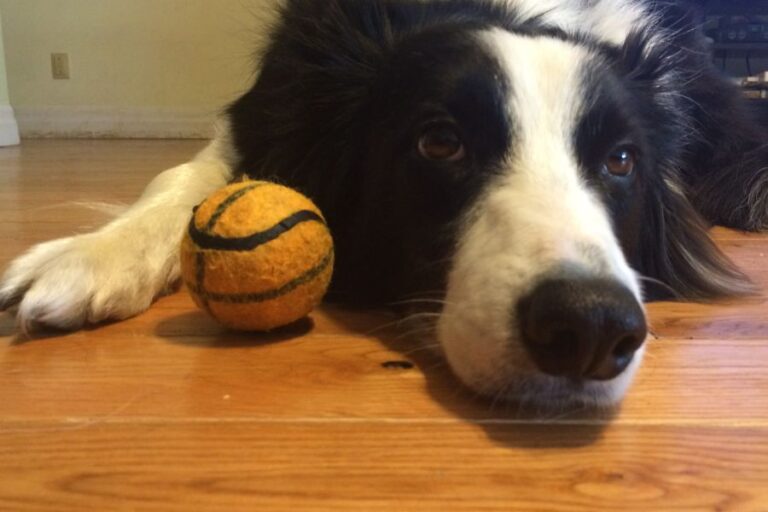
Lottie, my border collie, definitely smiles and tries to imitate human actions and ways. Not to mention that she’ll eat anything as long as it comes from the place humans get their food, i.e., the fridge.
She can manipulate me better than any human. One look from those eyes of hers and she has me wrapped around her paw. But can she laugh like a human? Good question.
So, Can Dogs Laugh Really?
Yes and no. Rather than laughing, dogs make a specific sound during play that seems to work much like laughter does for us, and the longer answer is that a researcher named Patricia Simonet spent years documenting it.
She recorded dogs at play in the early 2000s and found that they produce a distinct forced, breathy exhale that’s acoustically different from a regular pant. Normal panting has a fairly even frequency range. The play-pant, when you look at it on a spectrograph, is broader and burstier, closer to a hah-hah-hah than a steady huff.
When Simonet played recordings of that sound to dogs in a shelter, the dogs relaxed. Some of them wagged, some picked up toys, some approached the speaker. When she played recordings of regular panting, nothing much happened.
This suggests the play-pant isn’t just a byproduct of physical exertion; it’s a signal, and other dogs recognize it as one. It says, roughly, we’re playing; this is fun; don’t take the next bit seriously.
So when your dog is doing the zoomies around the yard and making that weird huffing noise, or when she’s on her back getting a belly rub and doing a little breathy grin, she is making a play-signal that other dogs would read as an invitation to keep the fun going.
Is it laughter in the way you and I laugh at a bad joke? Probably not in the cognitive sense. Is it the closest thing a dog has to it? I’d say yes, and I’d say the sound alone affecting other dogs’ behavior is a pretty strong argument that it matters.

How to Tell a Play-Pant From a Stressed Pant
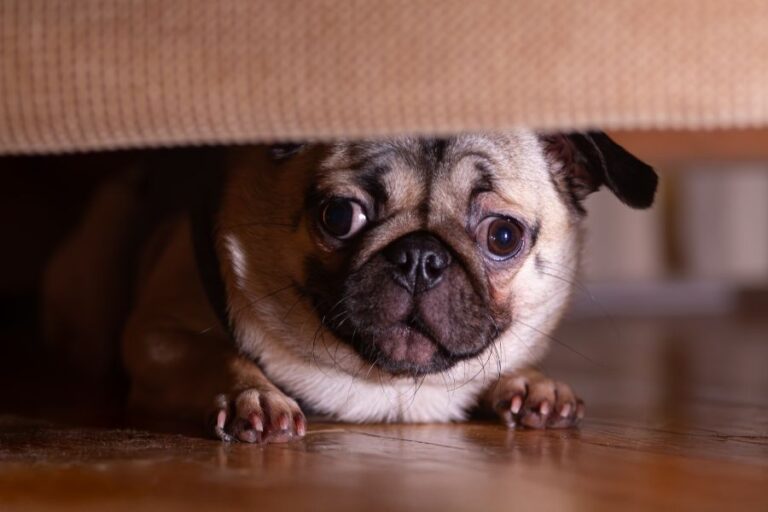
This is where it gets useful, because pants sound similar to us but say very different things to other dogs. A stressed pant tends to be faster, shallower, and more constant, and it usually comes with other stress signals like a tight mouth, whale eye (that half-moon of white showing at the edge), lip licking, or a low tail.
A play-pant is looser, comes in bursts, and lives inside a relaxed body: floppy movement, a curved spine, the classic play-bow with front elbows down and rear end up in the air.
The context tells you almost as much as the sound. If your dog is doing a play-bow and huffing at another dog, that’s a play-pant. If your dog is panting hard at the vet with pinned ears and a tucked tail, that’s stress.
And if your dog is panting steadily on a hot walk with a wide-open mouth and lolling tongue, that’s just thermoregulation; they’re cooling themselves down, and it means nothing emotional at all.
The reason this is worth knowing is that many dogs get labeled “friendly” at the dog park when they’re actually miserable, because their owner sees panting and assumes they’re happy.
If you can read the difference, you can tell when your dog is having a nice time at the park versus when they’re overwhelmed and just trying to hold it together.

The Dog Smile, and Why It’s Not Always What You Think
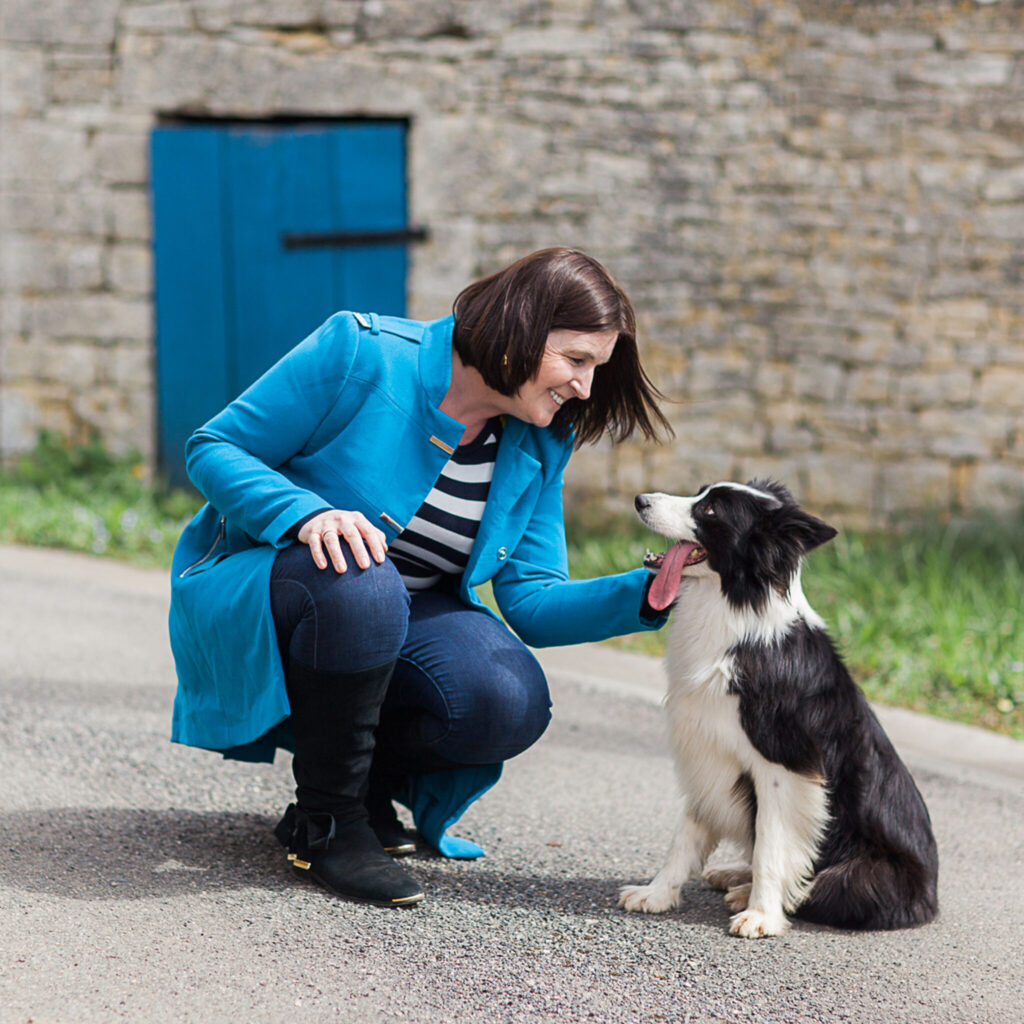
While we’re here, let’s talk about the grin, because the two things get mixed up. Dogs do a thing with their faces that looks like a smile: mouth open, corners pulled back, tongue sometimes lolling, eyes soft. Lottie definitely does this.
In a relaxed dog with loose body language, that’s a happy face, and it often shows up alongside the play-pant. The two travel together.
But there’s a look that gets called a smile that isn’t one, and it’s worth knowing because people misread it constantly. If the lips are pulled tightly back to show a lot of teeth, the body is stiff, and the eyes are hard or wide, that’s a warning.
Some dogs also do a submissive grin, which looks alarming but sits inside completely floppy, wiggly body language, usually with the head lowered and the whole rear end wagging along with the tail. It’s a peace offering, and it’s a happy sound in its own weird way, just not the same thing as the play-face.
The thing to look at first is always the body, not the face. A soft body with a play-bow and a huffing sound is a dog who wants to play with you. A stiff body with pulled-back lips and no huff is a dog telling you to back off. Same teeth on show, opposite meaning.
Rats Laugh Too, and It’s Adorable
Rats laugh. The neuroscientist Jaak Panksepp spent years studying rat vocalizations and found that when rats play or are tickled by a familiar human, they make a 50-kilohertz chirping sound that’s too high for us to hear without special equipment.
What’s remarkable about the finding isn’t just that rats make the sound. It’s that rats who make the chirp more will actively seek out the tickling, run mazes to reach the hand that tickles them, and bond with the humans who do it.
Panksepp mapped which parts of the rat brain lit up during the chirping and found overlap with the brain regions involved in positive emotion. Young rats chirp more than older ones, the same way human kids laugh more than adults, which is either sweet or slightly sad depending on your mood when you read it.
Parrots, Rabbits, and Where the Science Runs Out
Parrots are another place where the laughter question gets interesting, partly because some parrots will copy human laughter and use it in social contexts that suggest they understand what it’s for.
African Grey parrots and Amazons, in particular, will laugh when their humans laugh, laugh to get attention, and sometimes laugh at things that seem to amuse them, like the dog slipping on the floor or the cat falling off a chair.
Whether that counts as the parrot finding something funny or whether it’s learned social mimicry aimed at getting a reaction is up for debate, and if you’ve ever lived with a clever parrot, you’ll know the line between those two things gets blurry fast.
What parrots definitely have is a play vocabulary. Happy parrots grind their beaks softly when settling to sleep, do a kind of chattery muttering when content, and make specific play sounds when they’re doing acrobatics in the cage or hanging upside down being ridiculous.
It’s not laughter in the dog or rat sense, but it’s a positive-affect vocalization, and if you keep a parrot you already know exactly which of your bird’s noises mean happy versus which mean I am about to bite you.
I’ve seen it claimed online that rabbits laugh and I don’t think that stands up. What rabbits do is binky, that gorgeous mid-air twist and kick they do when they’re happy, and they grind their teeth softly (called tooth purring) when they’re content, usually while being petted.
Some rabbit people describe a quiet, huffy sound during play, but there isn’t research on it the way there’s with dogs and rats, and I’d be making it up if I told you rabbits laugh in any technical sense.