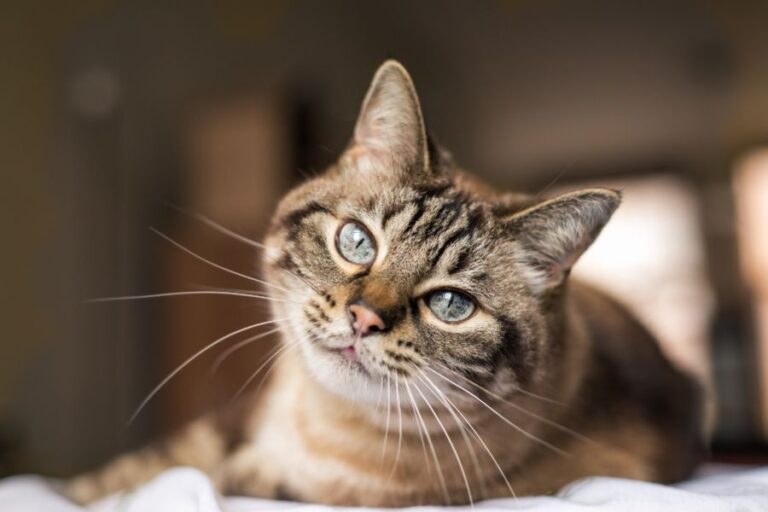
10 DIY Cat Enrichment Ideas That Will Stop Your Cat From Destroying Your House

Cats need mental stimulation just like we need our morning coffee. Without it, they get restless and destructive. The good news? You don’t need expensive toys or fancy gadgets to keep them happy. Most of what your cat craves is already sitting in your house.
Now I don’t have cats, but my brother has three. So when it comes to the feline side of things, he is my go-to as he’s had cats ever since he left home. He’s the master at knowing what they need and when. His house is full of weird and wonderful cat contraptions, many of which he’s made himself.
The cats rule in his house. In fact, the cats get pride of place on the sofa, not us humans. So over ot you, Ross, talk us through your DIY cat enrichment ideas.

10 DIY Cat Enrichment Ideas That Will Keep Your Cat Occupied
Let’s talk about how you can give your cat the mental workout they need without breaking the bank.
The Cardboard Box Palace
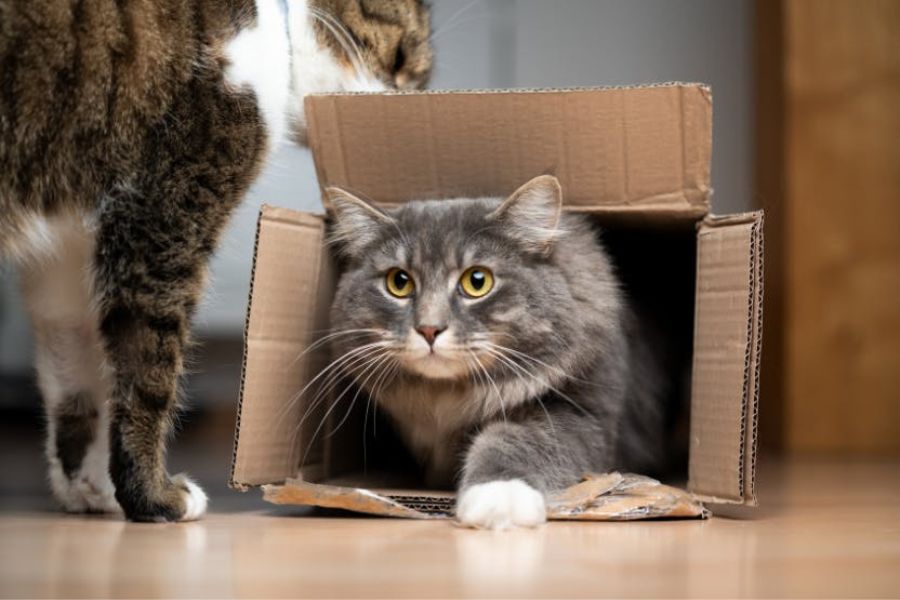
Before you recycle that Amazon box, stop. Your cat has plans for it. Cats are obsessed with boxes because they’re natural hunters who love confined spaces where they can hide and pounce.
Cut holes of different sizes on various sides of a large box. Make some big enough for your cat to jump through and others just large enough to stick a paw inside. Stack multiple boxes together and create tunnels between them. You’ve just built a feline amusement park for zero dollars.
The best part? When your cat gets bored with the configuration, just rearrange it. New layout, new excitement.
The Puzzle Feeder Game
Wild cats spend hours hunting for food. Your cat’s ancestors didn’t have someone filling a bowl twice a day. They had to work for every meal, and that mental challenge kept their brains sharp.
Take a muffin tin or egg box and drop a few treats or kibble pieces in each cup. Cover some cups with tennis balls or crumpled paper. Your cat has to figure out how to remove the obstacles to get the reward. It turns breakfast into a brain teaser.
You can make this harder or easier depending on your cat’s skill level. Some cats figure it out in minutes. Others need more time. Either way, they’re using their problem-solving skills, which helps to stimulate them.

The Paper Bag Hideout
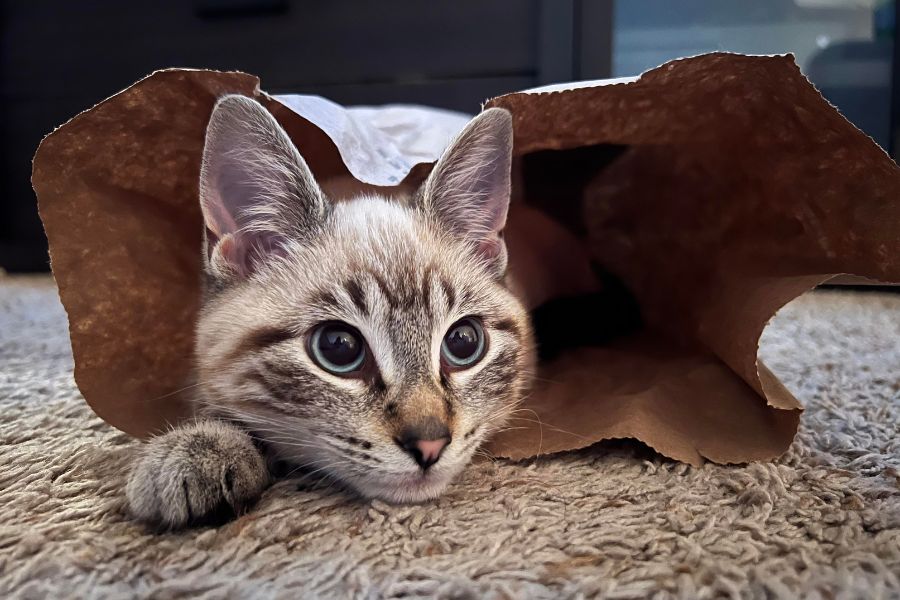
Paper bags (not plastic ones) are like tiny adventure zones for cats. The crinkly sound when they move inside triggers their hunting instincts. The enclosed space makes them feel safe while they plan their next attack on your unsuspecting toes.
Lay a few paper bags on their sides around your living room. Toss a small toy or treat inside one. Your cat will investigate, pounce, and probably spend the next hour playing hide and seek with themselves.
Just remember to cut off any handles first. You don’t want your cat getting stuck or panicking if they accidentally put their head through a loop.
The Rotating Toy System
Here’s something most cat owners don’t realize: your cat doesn’t actually hate their toys. They’re just sick of seeing the same ones every single day. Makes sense, that’s like us watching the same TV show on loop.
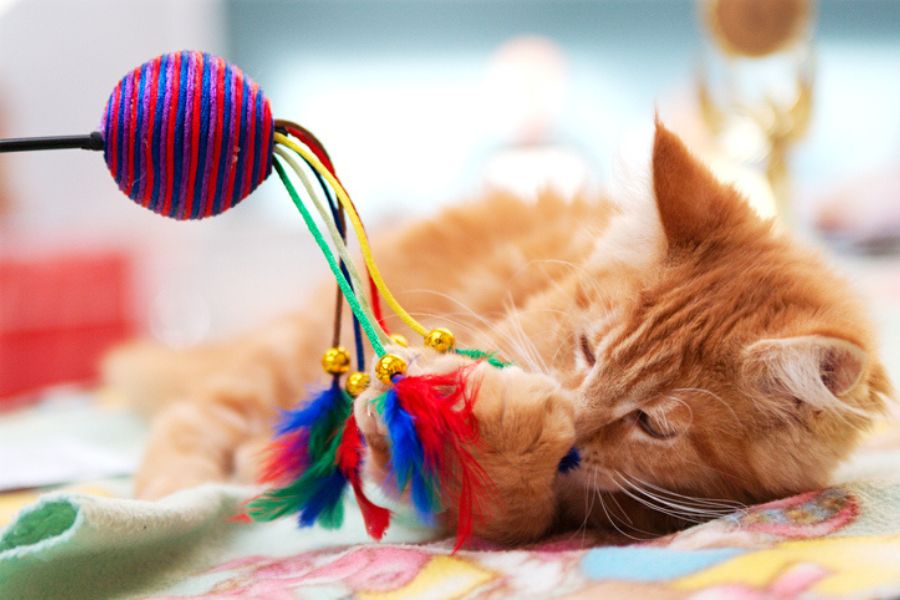
Put away three-quarters of your cat’s toys, keeping a few out at a time. Every week, swap them out for different ones from storage. Suddenly, that feather wand from three months ago is exciting again because it feels new.
This trick works because cats have short attention spans when it comes to the same stimulation. But reintroduce something after a break? They act like you just brought home the best gift ever.
The Window Bird Theater
If your cat doesn’t have a good view of the outdoors, you’re missing out on hours of free entertainment. A window perch or even a sturdy box near a window gives your cat access to the ultimate reality TV show: birds, squirrels, and whatever else is happening outside.
Position a bird feeder or birdbath within view of the window. Your cat will spend hours watching, chattering, and mentally hunting. It’s exercise for their brain even though they’re just sitting there.
Some cats get so into their window watching that they barely notice you’re home. That’s not neglect, that’s a properly enriched cat.
The Treat Hunt Adventure
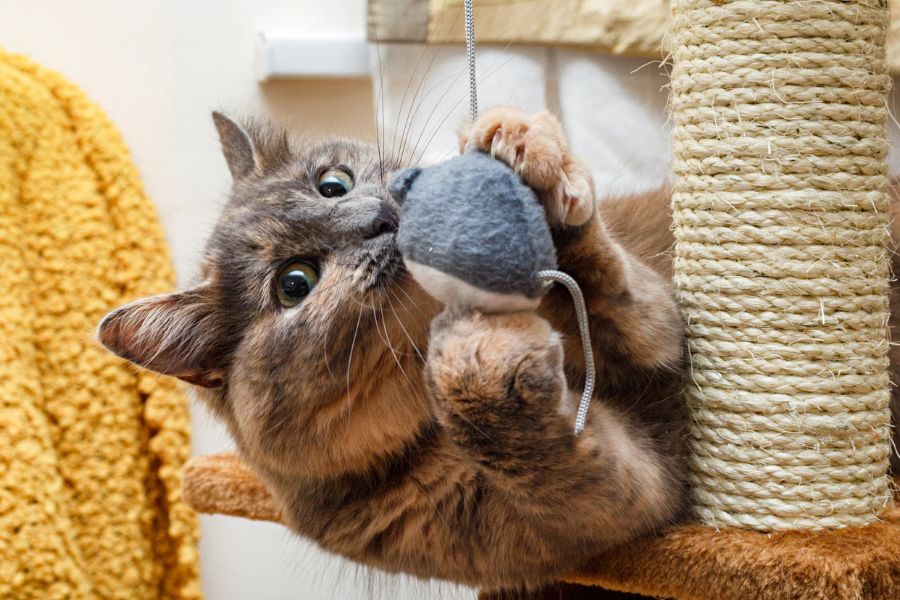
Stop feeding your cat from a bowl in the same spot every day. Instead, make them hunt for their food as their ancestors did.
Hide small portions of treats or kibble around your house. Start easy with obvious spots like behind the couch leg or under a chair. As your cat gets better at the game, make the hiding spots trickier.
This transforms eating from a boring routine into an exciting scavenger hunt. Your cat uses their sense of smell, their memory, and their problem-solving skills. Plus, they’re getting physical exercise as they search.
The Toilet Paper Roll Toy
Before you toss that empty toilet paper roll, turn it into a puzzle toy. Fold in one end of the tube, drop a few treats inside, then fold in the other end. Poke a few small holes in the sides.
Your cat can smell the treats inside, but has to figure out how to get them. They’ll bat it around, chew on it, and eventually destroy it to claim their prize. The whole process probably takes ten minutes, but that’s ten minutes of mental stimulation they wouldn’t have gotten otherwise.
This toy is disposable, so you never have to clean it. Just toss it when they’re done and make a new one tomorrow.
The Vertical Territory Expansion
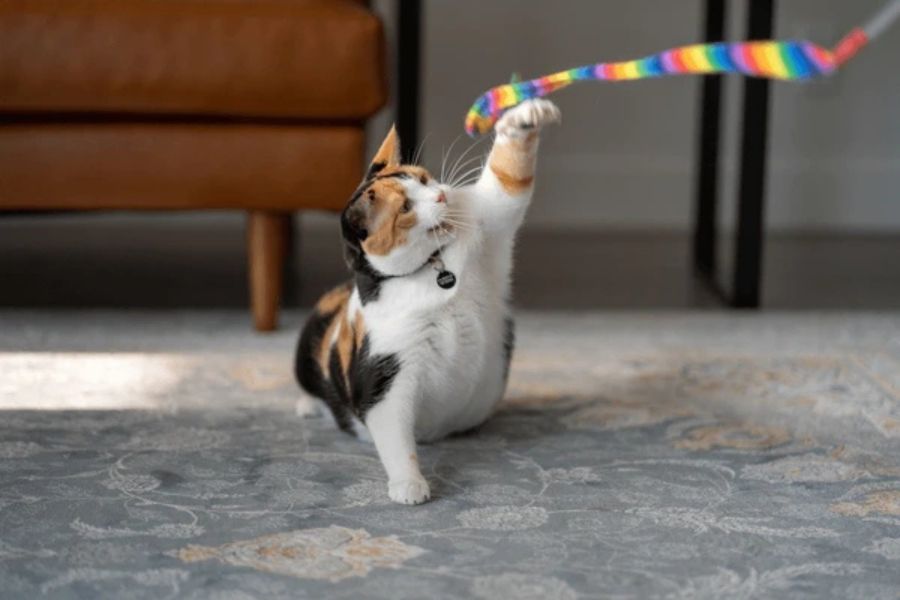
Cats don’t think about space the way we do. Where we see floor space, they see vertical territory. A room that looks small to you could actually offer tons of space for a cat if you use the walls and furniture.
Add shelves at different heights that your cat can jump between. Rearrange furniture so they can climb from the couch to a bookshelf to a cat tree. Create pathways along the tops of your furniture. You’re building a jungle gym that uses the entire room.
This is especially important in small apartments. Your cat doesn’t need more square footage; they need more climbing opportunities.
The DIY Snuffle Mat
Take an old rubber sink mat (the kind with holes in it) and cut fleece fabric into strips about 6 inches long. Tie each strip through the holes in the mat until the entire thing is covered in fabric pieces.
Hide treats or kibble deep in the fabric strips. Your cat has to use their nose and paws to search through the fabric forest to find food. It mimics the experience of hunting through grass or leaves for prey.
You can make this in an hour while watching TV. One mat will last for months, and your cat will use it daily if you make it part of their feeding routine.
The Interactive Play Sessions
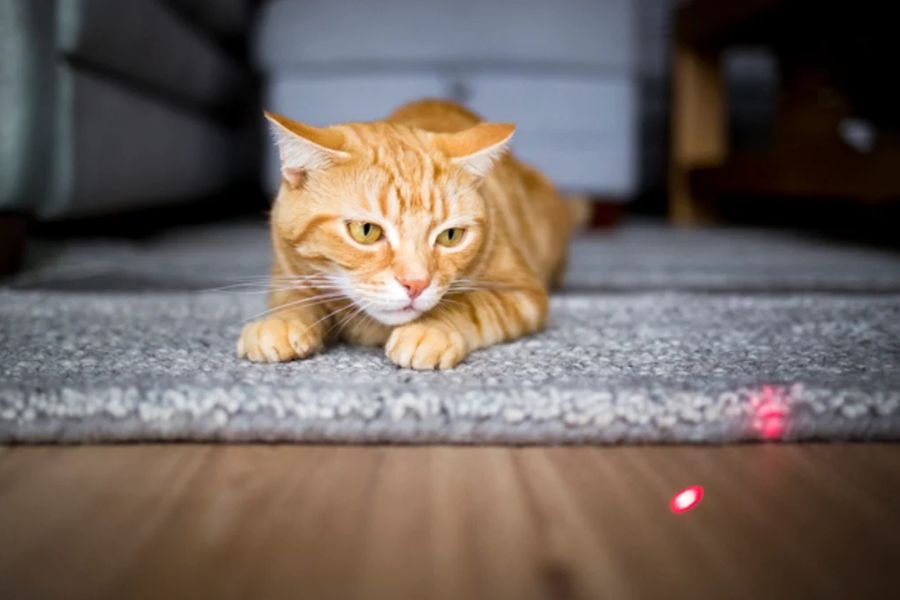
This one costs nothing but requires something more valuable: your time. Cats need active play sessions where they can chase, pounce, and catch things. A laser pointer or a string toy works perfectly.
The key is consistency. Ten minutes of active play twice a day does more for your cat’s mental health than any toy you can buy. You’re mimicking the hunt, letting them practice their natural behaviors in a safe environment.
End every play session by letting your cat “catch” the toy. A hunt that never ends in a catch is frustrating, not fun. Let them win, let them feel successful, and watch them strut away like they just conquered the wilderness.
Why Your Cat Actually Needs This Stuff
Indoor cats spend up to 16 hours a day sleeping, and when they’re awake, they need something to do with all that pent-up energy. According to a study published in the Journal of Feline Medicine and Surgery, cats without adequate environmental enrichment are at higher risk for stress-related illnesses, including feline lower urinary tract disease, obesity, aggression, and compulsive disorders like overgrooming.
The research shows that when cats lack appropriate environmental stimulation, they develop behavioral problems that are so severe that owners sometimes end up relinquishing them or having them euthanized.
Wild cats spend around 6 to 8 hours per day hunting and patrolling their territory, so your indoor cat still has those same instincts and energy levels, with nowhere to direct them. When you provide enrichment activities, you’re giving your cat a job to do, which satisfies their natural drive to hunt, explore, and problem solve. A bored cat finds their own entertainment, and that usually means your furniture, your sleep schedule, or your ankles become the target.
A mentally stimulated cat is calmer, happier, and way easier to live with. They sleep better, play appropriately, and stop seeing your ankles as prey. You’re not spoiling them by providing enrichment. You’re meeting their basic psychological needs.
The best part? Most of these ideas take minutes to set up and cost almost nothing. Start with one or two ideas this week. See what your cat responds to. Some cats love puzzle feeders but ignore cardboard boxes. Others are obsessed with window watching but couldn’t care less about snuffle mats. Every cat is different, and that’s part of the fun of figuring out what makes yours tick.
Your cat is spending their entire life inside your home. The least you can do is make sure that home is interesting enough to explore every single day.